a self hosted notes app
shizumu is a private writing app, and the notes themselves need no server: they live in a database on each device. the only thing you self-host is the optional sync relay, and it is small, free to run, and unable to read what it carries.
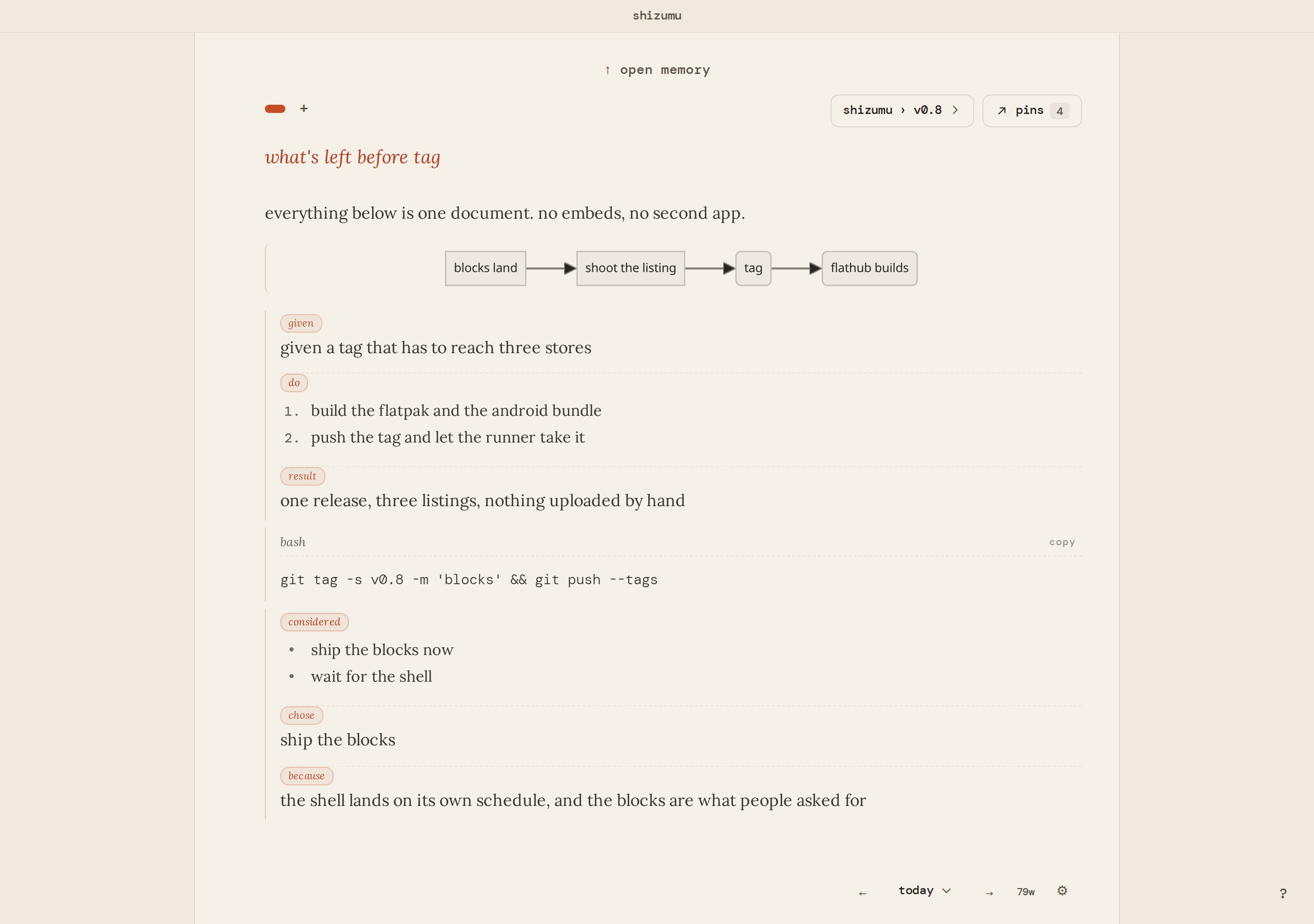
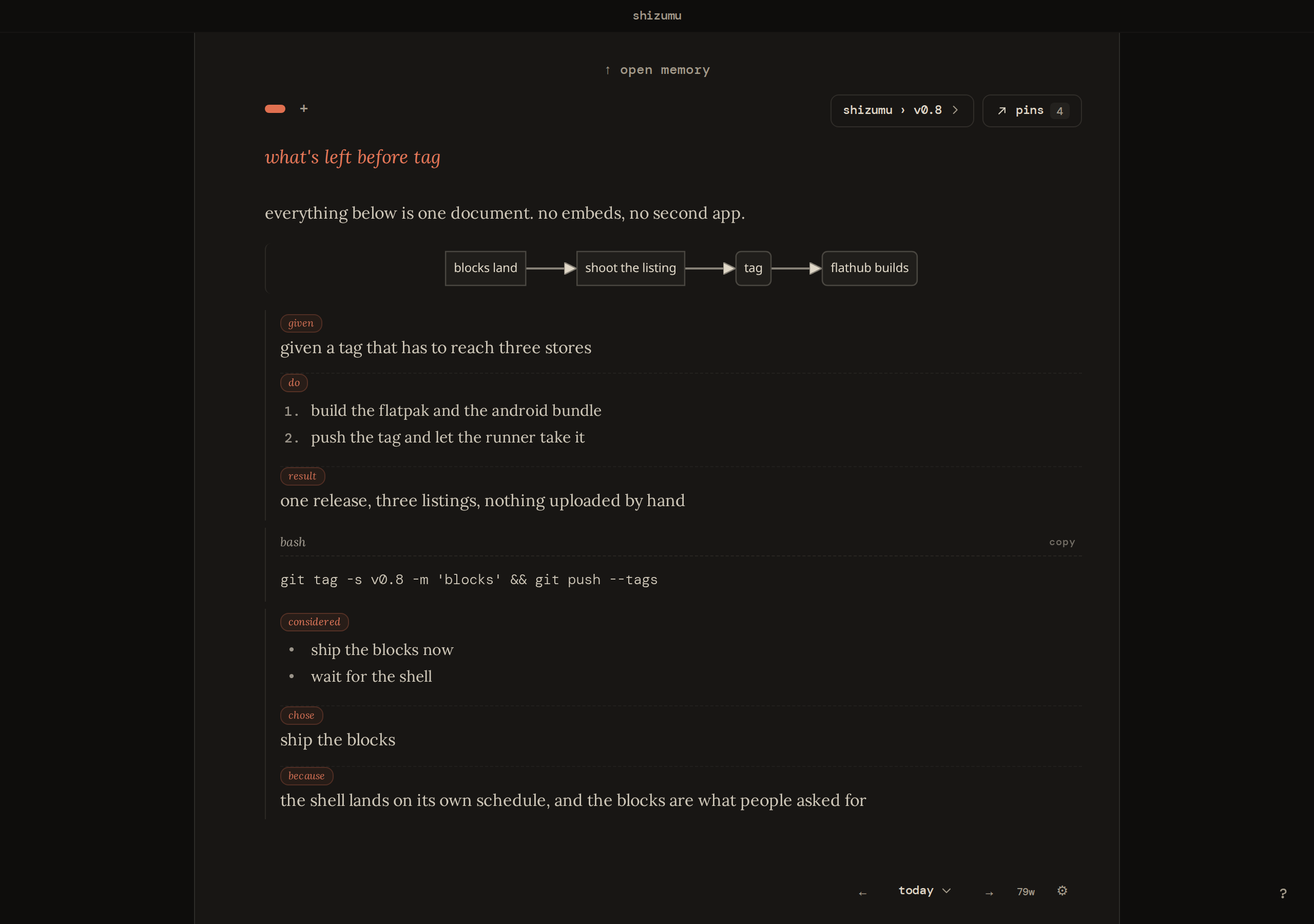
where the notes live
the writing is a database on each device, on linux and windows, with android in a closed test on google play (ask to join), mac as a beta download and iphone as a testflight beta. there is nothing to host before you write, and it works offline. most self hosted notes apps put the notes on your server and give you a client to reach them. here the device is the home of the notes, and the server only moves sealed changes between devices.
who it fits, and who it doesn't
if you want a browser interface served from your own box, reachable from any machine without installing anything, that is a different shape: trilium and memos are built that way. shizumu fits people who want native apps on the devices they own, notes that keep working when the server is down, and a server that holds nothing it can read. that split is what keeps the server simple.
what you actually host
sync goes through a relay that passes sealed changes between your devices. it is one binary and one sqlite file, with no separate database service, no queue and no cache, and a raspberry pi is enough. attachments go to a plain disk, one more sqlite file, or any s3-compatible store such as minio, garage or r2. it is the same binary behind the hosted tier, not a cut-down version.
build it from a release tag with cargo, or build its docker image locally, write a short toml file, and give it https: it can fetch its own certificate, or sit behind a proxy like caddy. single-user mode is one account for all your devices. the steps, start to finish: self-deploy.
what the relay can read
none of your writing. sync is optional and end-to-end encrypted: the relay holds what it cannot read, and neither can we. every page is sealed on your device with xchacha20-poly1305 before it leaves, and the keys never leave your devices. the relay does see the size of each sealed blob, its hash, when it arrives, and which blobs belong together; it cannot see content, titles or filenames. that is written down in full: what the relay can and cannot see, and how sync is encrypted.
what it costs
the app is free. running your own relay is free too, on every device. if you would rather not run a server, the hosted relay is free on two devices and is still end-to-end encrypted: pricing. the client is apache-2.0 and the relay agpl-3.0-or-later, and the relay source is on github.
what you write in it
a page starts empty. you write to think, and when a line matters you pin it. a trail is for a project, not a day: a book, a job search, anything you'll come back to tomorrow. choose a trail and the page picks up context: the pins you already kept there, already on the page. everything else lives in memory: search it, or open one trail, one date, pages, or pins. it is keyboard driven: / for a block, @ for a page, a pin or a trail, ctrl+k for the palette.
moving notes in, and out
notes from another app paste onto a page, and pasted markdown keeps its headings, lists and code as blocks. on the way out, every page exports as a markdown file into a folder you choose, and settings can make a full backup of the database. both stay on your own disk.
try it before you run anything
the app runs in your browser with a few weeks of writing already in it: try it. also worth a look: a joplin alternative, a notesnook alternative, and an open source journaling app.
what holds on every platform
shizumu is free, on linux, android, and windows. your writing stays on your device. sync is optional and end-to-end encrypted: the relay holds what it cannot read, and neither can we. the app and the relay are open source: apache-2.0 on the client, agpl-3.0-or-later on the relay.
it will not write for you, because the writing is the thinking.
try it in your browser download
hear when a release lands
occasional notes, only when something ships. unsubscribe any time.